
Australia’s extensive marine biodiversity is demonstrated by the existence of bottlenose dolphins in its coastal seas, which also highlights the significance of these areas for maintaining a variety of ecosystems.
Bottlenose dolphins are important for keeping the health and balance of marine habitats since they are apex predators.
Their existence can serve as an indicator of the general health of coastal habitats, and their eating patterns aid in controlling fish populations.
Conservation Challenges and Efforts
Bottlenose dolphins are resilient and adaptable animals, yet they nevertheless suffer a number of hazards in their coastal environments, such as pollution, habitat deterioration, and entanglement in fishing gear.
Australia is home to numerous conservation programs that conserve these famous marine creatures. These programs center on habitat conservation, public education, and research. [Where Do Bottlenose Dolphins Live In Australia?]
We can contribute to securing a sustainable future for bottlenose dolphins and their habitats by increasing public awareness of the significance of protecting coastal environments and minimizing human influences.
Bottlenose Dolphin Diet
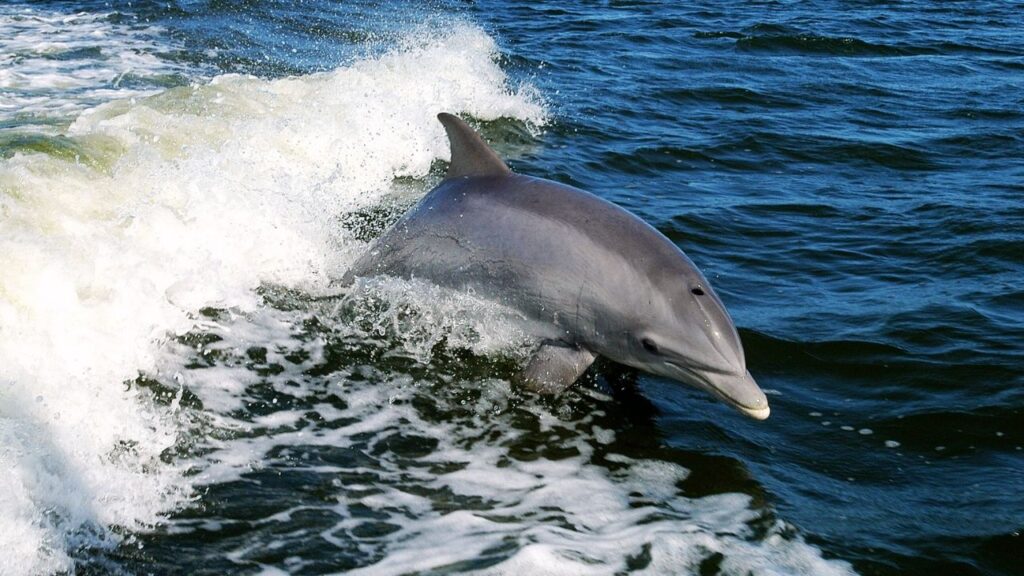
The main components of the diverse diet of bottlenose dolphins are fish and squid. As opportunistic feeders, they will take whatever is easily obtained in their surroundings. They might also eat small mammals and crustaceans.
The cooperative hunting methods of bottlenose dolphins, which hunt in groups known as pods and collaborate to corral and catch prey, are well documented. [Where Do Bottlenose Dolphins Live In Australia?]
Bottlenose Dolphin Life Cycle
A bottlenose dolphin’s life cycle starts at birth. The usual gestation period for female bottlenose dolphins, sometimes known as cows, is 12 months, during which time they give birth to a single youngster.
After being born in the water tail first, calves immediately start swimming with their mothers. In the early stages of life, they are dependent on their mothers for safety and milk.
Young dolphins, known as calves, pick up vital survival skills from their moms and other pod members as they get older. The sexual maturity of bottlenose dolphins occurs between the ages of 5 and 13, contingent upon gender and environmental conditions.
Bottlenose dolphins typically live between 40 and 50 years, though under ideal circumstances, some may live longer. [Where Do Bottlenose Dolphins Live In Australia?]
Australian Dolphin Species
Australia is home to several species of dolphins, each with its own unique characteristics and habitats. Some of the most common dolphin species found in Australian waters include:
Bottlenose Dolphin (Tursiops truncatus): Australia’s coastal seas are home to the bottlenose dolphin or Tursiops truncatus, one of the most well-known dolphin species.
Indo-Pacific Humpback Dolphin (Sousa chinensis): The Indo-Pacific Humpback Dolphin (Sousa chinensis) is a species of dolphin found in rivers, estuaries, and shallow coastal waters in northern Australia. It is distinguished by its characteristic hump.
The Orcaella heinsohni, or Australian Snubfin Dolphin: The Australian snubfin dolphin, which is native to northern Australia, is distinguished by its short, stubby dorsal fin and is frequently spotted in rivers and estuaries that are fringed with mangroves.
Common Dolphin (Delphinus delphis): Distinguished by its eye-catching black and yellow coloring, the common dolphin is found in offshore areas throughout Australia.
Common Dolphin Australia
Among the dolphin species that can be found in Australian seas is the common dolphin (Delphinus delphis).
The hourglass-shaped pattern on the sides of these dolphins, which is surrounded by black and has a yellowish-tan hue, is what makes them unique. Common dolphins usually inhabit offshore seas, where they consume squid and small fish for food.
Due to their high degree of social interaction, these animals sometimes move in big groups called pods, which can include hundreds or even thousands of people. [Where Do Bottlenose Dolphins Live In Australia?]
Common dolphins are nevertheless occasionally seen on offshore boat excursions or when whale watching in some parts of Australia, despite being less common than bottlenose dolphins in coastal areas.
FAQs: Where Do Bottlenose Dolphins Live In Australia?
Where Do Most Bottlenose Dolphins Live?
Around the world, the majority of bottlenose dolphins can be found in offshore and coastal areas. They live in a variety of settings, including those found in the ocean, bays, estuaries, and coral reefs. Although it is well known that bottlenose dolphins like temperate and tropical waters, depending on the species, they can also be found in colder climates.
Can you find dolphins in Australia?
Dolphins are indeed present in Australian waters. Numerous dolphin species can be found in Australia, including the Indo-Pacific humpback dolphin, bottlenose dolphin, common dolphin, and Australian snubfin dolphin. From the temperate waters of Australia’s southern coast to the tropical waters of the Great Barrier Reef, these dolphins live in a variety of coastal and offshore habitats.
Are dolphins common in Australia?
Indeed, Australia has a fair number of dolphins, especially along its vast coastline. Dolphin sightings are frequent in Australian waterways, though the quantity of dolphins may vary according to location, habitat, and season. Dolphins can be seen from the shore in some places, as well as during boat excursions and coastal walks.
Are bottlenose dolphins native to Australia?
Yes, Australia is home to bottlenose dolphins. In Australian seas, they are among the most well-known and extensively dispersed dolphin species. Australia’s whole coastline, from the northern tropical waters to the southern temperate zones, is home to bottlenose dolphins. They live in a range of offshore and coastal settings and are frequently seen by fishermen, boaters, and marine enthusiasts across the nation.
Conclusion: Where Do Bottlenose Dolphins Live In Australia?
In addition to being adored symbols of Australia’s coastal waterways, bottlenose dolphins are essential members of marine ecosystems.
From the vivid reefs of Moreton Bay to the azure seas of Shark Bay, these perceptive and endearing animals never fail to enthrall and motivate everyone they come into contact with.
With a shared awareness of their habitats, ecological importance, and conservation requirements, we can collaborate to protect bottlenose dolphins and the oceans in which they live.

Mr. Das, a certified pharmaceutical scientist, holds a Bachelor of Science in Pharmaceutical Sciences and passionately contributes to dolphin conservation as a member of the committee in Bangladesh.

Comments are closed.