

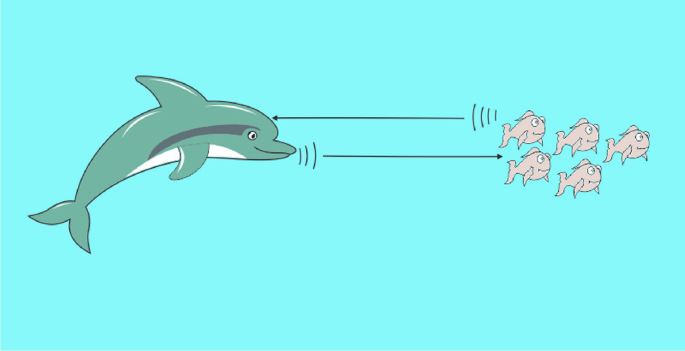
Dolphins possess extraordinary acoustic abilities, notably their proficiency in echolocation, which facilitates prey detection and navigation in their underwater environment.
Through emitting clicks and interpreting the resulting echoes, dolphins gain comprehensive insights into their surroundings, even in conditions of limited visibility.
| Aspect | Description |
| Prey Detection | Dolphins emit high-frequency clicks during foraging, utilizing echolocation to discern the size, shape, and proximity of potential prey items. This enhances their hunting efficiency in various aquatic environments. |
| Navigation | Employing sonar, dolphins map their surroundings and identify key features for navigation purposes. This aids in migration, hazard avoidance, and maintaining social bonds within their pod. |
| Communication | Echolocation also serves as a means of communication among dolphins, enabling them to interact with each other and coordinate activities within their social groups. |
In summary, dolphins’ acoustic abilities, particularly their adeptness in echolocation, empower them to locate prey, navigate effectively, and communicate with fellow pod members.
These capabilities are crucial for their survival and success in their marine habitats.
Comparisons To Other Sonar Systems
Dolphins have a sonar system that is comparable to bat sonar but distinct from human sonar. Dolphins use echolocation, not human sonar, to locate prey and navigate.
By making noises and deciphering the echoes they receive back, they can use echolocation to get a clear image of their environment. In a similar manner, bats locate items in their surroundings by echolocation.
Despite the fact that both dolphins and bats employ echolocation, their sonar systems differ in a few ways. Dolphins click, and bats make high-pitched noises.
Dolphins’ sonar system enables them to identify prey from a distance, so they can detect items even when they are blind. Bats find food in congested areas and navigate in the dark using echolocation, which is more dependent on vision.
In conclusion, dolphins have a unique sonar system that differs from human sonar but shares features with bat sonar. [Do Dolphins Have Sonar?]
Understanding these differences and similarities helps us appreciate the diversity of nature’s remarkable adaptations.
See Also: Do Dolphins Have A Language? Enigmatic Communication System
Impact Of Sonar On Dolphins
Dolphins are significantly impacted by acoustic interference caused by human activity. To navigate, communicate, and find food, these aquatic animals mostly rely on their echolocation sonar system.
Human use of high-intensity sonar for commercial and military applications can interfere with dolphins’ normal behavior and endanger their health.
Dolphins may lose their hearing permanently or temporarily as a result of exposure to strong sonar pulses.
Additionally, it may result in behavioral modifications such as habitat abandonment, altered migration patterns, or avoidance of significant feeding locations.
Furthermore, the disturbance brought on by sonar may create stress and physiological problems in dolphins. [Do Dolphins Have Sonar?]
Since sonar has the potential to damage dolphins, conservation measures have been put in place to safeguard and improve their welfare.
Creating marine protected zones, passing laws restricting the use of sonar in delicate environments, and promoting technology advancements to create sonar systems with reduced noise levels are some of these initiatives.
By means of such activities, we can endeavor to mitigate the adverse effects of sonar on dolphins and guarantee their continued existence in the waters.
Revolutionizing Technology Through Dolphin Sonar
Dolphins possess an extraordinary sonar system, known as echolocation, which has captivated researchers and inspired groundbreaking technological advancements across multiple domains.
| Application | Description |
| Underwater Navigation | Dolphin sonar has led to breakthroughs in underwater navigation systems. By studying dolphin echolocation, scientists have developed sonar technologies capable of mapping vast expanses of the ocean floor, facilitating marine research and exploration. |
| Autonomous Underwater Vehicles (AUVs) | The mimicry of dolphin sonar capabilities in AUVs has revolutionized underwater vehicle technology. AUVs equipped with sonar systems can autonomously navigate and adapt to changing environments, enhancing their utility in underwater surveys, environmental monitoring, and search and rescue operations. |
| Medical Imaging | Dolphin sonar principles have inspired advancements in medical imaging techniques. Researchers have leveraged echolocation concepts to develop non-invasive imaging modalities for early disease detection and improved treatment outcomes in the field of medicine. |
In summary, the remarkable sonar abilities of dolphins have sparked innovation in underwater technology, navigation systems, and medical imaging, paving the way for enhanced capabilities and applications across diverse industries.
Frequently Asked Questions On Do Dolphins Have Sonar?
Dolphins navigate and find items in their environment via sonar, also referred to as echolocation. They make high-frequency noises and then wait for an echo. Dolphins are able to navigate and avoid obstacles by determining the location and size of objects by assessing the direction and time of the echo.
Can Dolphins Use Sonar To Communicate?
Indeed, dolphins use sonar for both communication and navigation. across their vocal cords, they produce clicks and whistles that reverberate across the water. Dolphins are able to send messages and express emotions to one another by deciphering the echoes of these vocalizations.
What Are The Benefits Of Dolphins Having Sonar?
Dolphins that possess sonar benefit from numerous advantages. It enables them to locate and pursue animals more successfully during food hunting. Dolphins can navigate and avoid potential hazards like predators and underwater obstructions with the aid of sonar. They are able to survive and even flourish in their maritime surroundings because of their sonar talents.
Conclusion
Dolphins are amazing animals that use sonar to communicate and navigate in their aquatic habitat. [Do Dolphins Have Sonar?]
They can find prey, avoid obstacles, and interact with other members of their pod because of their ability to produce sound waves and understand the echoes that arise.
Our admiration of these highly adaptive and clever marine mammals is enhanced by our comprehension of the intricacy of their sonar system.

Mr. Das, a certified pharmaceutical scientist, holds a Bachelor of Science in Pharmaceutical Sciences and passionately contributes to dolphin conservation as a member of the committee in Bangladesh.

Comments are closed.