
Are Dolphins Cold-Blooded? No, dolphins are not cold-blooded; they are warm-blooded mammals, meaning they can regulate their body temperature internally.
In general, people tend to think of dolphins, graceful and intelligent mammals of the sea, as cold-blooded animals.
On the other hand, the situation is not as it is shown. In this article, you will learn the real truth about dolphins while the myth about dolphins’ origin is debunked.
Understanding Cold-Blooded vs.Warm-Blooded
Being an ectotherm or an endotherm characterizes two different classes of animals in the animal world with absolutely distinct modes for thermoregulation.
Cold-Blooded Animals (Ectotherms):
Definition: The ones that are cold-blooded, like reptiles, amphibians, and fish, are simply exposed to the heat from the environment to maintain their body temperature.
Thermoregulation: They can either warm up by remaining in the sun bask in the heat or look for warmer places to be. And their body temperature also goes up and down with the environment.
Metabolism: Unlike mammals and birds, which require energy to maintain their core temperatures, reptiles and amphibians are poikilothermic, and as a result they have lower metabolisms.
Examples: Snakes, lizards, tortoises, frogs, and fish.
Warm-Blooded Animals (Endotherms):
Definition: These animals, of the warm-blooded type, that is, mammals and birds, are capable of self-regulating their body temperature internally without depending on the temperature outside.
Thermoregulation: They regulate body temperature at a stable level by means of physiological mechanisms that either produce heat or cooling, such as shivering and sweating.
Metabolism: Since warm-blooded organisms have higher metabolic rates compared to cold-blooded animals, they are continuously producing heat to carry on the internal temperature of the organisms.
Examples: Dolphins, whales, humans, birds, and the majority of mammals.
Comparison Table:
| Aspect | Cold-Blooded Animals | Warm-Blooded Animals |
| Thermoregulation | Rely on external heat sources | Internally generate and regulate heat |
| Metabolic Rate | Lower metabolic rate | Higher metabolic rate |
| Body Temperature | Fluctuates with external environment | Maintains a relatively constant temperature |
| Examples | Reptiles, amphibians, most fish | Mammals, birds, dolphins, whales |
Knowing how different animals (cold-blooded and warm-blooded) utilize different strategies to adapt to and survive in their environment will give us a glimpse of nature’s diversity.
Moreover, it gives the idea of complex systems that organisms employ to maintain optimal physiological function.
Whereas cold-blooded creatures rely on the heat from the environment to regulate their body temperature, warm-blooded creatures have evolved mechanisms inside their bodies.
They generate and maintain body warmth allowing them to live in many of the habitats with diverse climates.
Debunking the Myth: Are Dolphins Cold-Blooded?
Surprisingly, dolphins are not cold-blooded organisms as commonly assumed. Actually, they are living in a warm-blooded society along with humans and other mammals.
This categorization is due to their ability to body temperature regulation internally, which is a characteristic that is of high essential for marine life since the marine environments they inhabit are diverse and often unpredictable.
Reasons Why Dolphins Are Not Cold-Blooded
Warm-blooded Physiology:
Dolphins, as well as other mammal species, are one of the examples of endothermic animals, the scientific term for warm-blooded animals.
This means they do not only keep their body temperature constant within a narrow range but also regulate it from the inside. Unlike cold-blooded (ectothermic) animals, which have to rely on external sources of heat.
Efficient Metabolism: Are Dolphins Cold-Blooded?
The dolphins have an effective metabolism that is able to keep the body heat of the dolphins at an optimum level by generating and retaining heat inside the body.
While they do not have the adjustment mechanism of warm-blooded animals, they still have a higher metabolic rate that reflects continuous energy expenditure to keep their body temperature.
Temperature Regulation Mechanisms:
Dolphins have developed sophisticated physiological tools for temperature regulation, which they constantly use.
Such responses include either vasoconstriction or vasodilation to conserve or dissipate heat, while behavioral adaptations such as basking in the sunlight and going to the deeper waters with warmer temperatures are also used to regulate the temperature of their bodies.
Insulating Adaptations:
They have a thicker layer of blubber under their skin that works as an insulator from freezing conditions. They store the heat within this layer of blubber and their body temperature remains stable even in the cold waters of the ocean.
Warm-blooded Classification:
Scientific classifying emphasizes that dolphins are also warm-blooded mammals. This is the same group as humans and other endothermic animals. [Are Dolphins Cold-Blooded?]
This classification occurs due to their physiological features and the capability of maintaining a proper internal environment without the help of their environment.
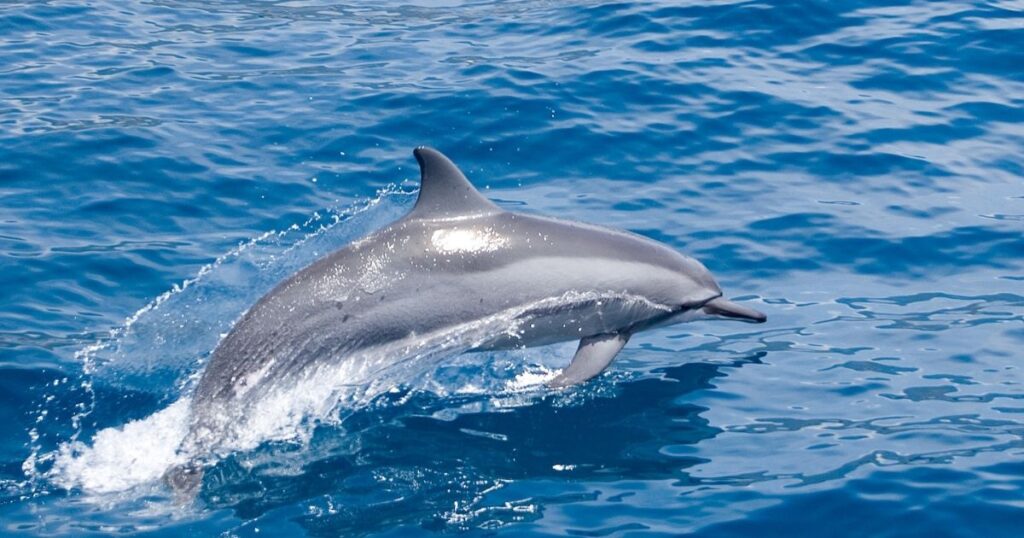
Importance of Temperature Regulation in Dolphins:

Mr. Das, a certified pharmaceutical scientist, holds a Bachelor of Science in Pharmaceutical Sciences and passionately contributes to dolphin conservation as a member of the committee in Bangladesh.
Table of Contents

Comments are closed.