


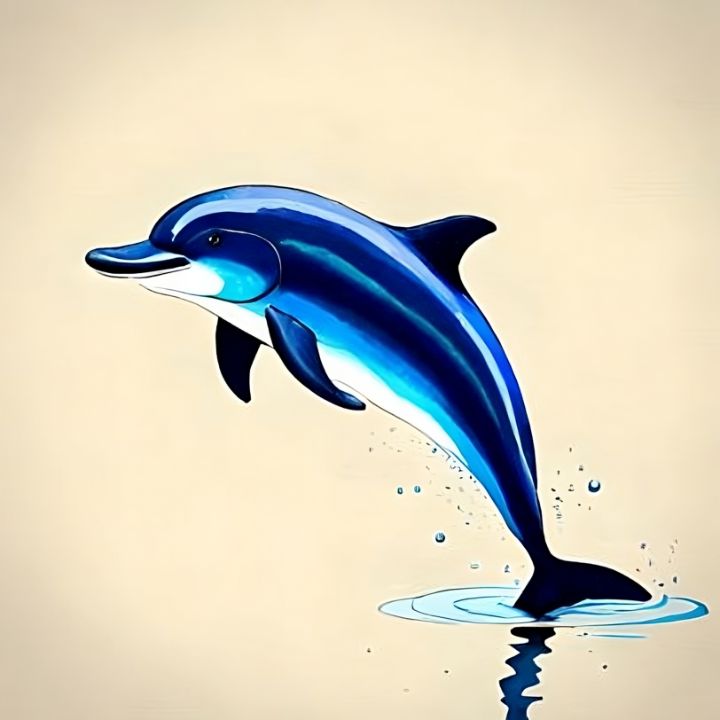
Are Blue Dolphins Real? Blue dolphins, as depicted in literature, are fictional. However, some dolphin species may exhibit bluish hues, but a distinct “blue dolphin” species has not been scientifically documented.
Dolphins have always fascinated us with their smarts, elegance, and playful antics, right? And you know what’s really got people talking?
Blue dolphins! They’ve sparked all sorts of questions and discussions. But are these mystical creatures real or just stuff of legends and stories? Let’s chat and see what’s what with these blue dolphins.
The Origin of Blue Dolphins
The concept of blue dolphins originates from Scott O’Dell‘s iconic children’s novel, “Island of the Blue Dolphins,” first published in 1960.
This beloved tale follows the journey of Karana, a young Native American girl stranded on an island off the coast of California, as she navigates survival alongside a pack of wild dogs and a friendly dolphin companion.
While the narrative is fictional, it has captivated audiences worldwide, sparking interest and imagination about the existence of such creatures. [Are Blue Dolphins Real?]Blue Dolphins in Literature Origins Publication Year Plot Genre Impact
“Island of the Blue Dolphins” is a fictional work, but its depiction of human resiliency, the relationship between people and animals, and the beauty of nature makes it resonate with readers.
The story is given depth by the detailed portrayal of the island’s surroundings and the difficulties that its residents encounter, drawing readers even deeper into Karana’s world.
The novel’s depiction of blue dolphins may be entirely made up, but it nevertheless serves as a poignant reminder of how important it is for humans to remain connected to the natural world.
O’Dell fosters a deeper appreciation for the beauties of marine life by guiding readers through themes of survival, camaraderie, and the mysteries of the ocean through storytelling.
In conclusion, while blue dolphins may only exist within the pages of “Island of the Blue Dolphins,” their symbolic significance continues to inspire awe and wonder. [Are Blue Dolphins Real?]
O’Dell’s timeless tale serves as a testament to the power of literature to ignite imagination and foster a greater understanding of the world around us.
Real-Life Inspiration
The Common Dolphin
There is a concrete link between the idea of blue dolphins and the common dolphin (Delphinus delphis). These dolphins are not completely blue, but they frequently have a bluish-gray color, which adds to their unique appearance.
Common dolphins are widely found in all of the world’s oceans, from temperate to tropical ones, and are well-known for their antics and fun nature. They are known as “blue dolphins” in popular culture because of their sleek bodies and subdued hue.
See Also: Are Rainbow Dolphins Real? Debunking the Myth
Variations in Coloration
There are color differences in dolphin species, such as the Indo-Pacific bottlenose dolphin (Tursiops aduncus), ranging from gray to blue undertones.
A number of variables, including dietary practices, environmental effects, and genetic makeup, contribute to these variances. [Are Blue Dolphins Real?]
For instance, dolphins inhabiting regions with specific water conditions may develop bluish tones in their skin due to light interaction and water clarity.
Blurring Reality and Myth
Although dolphins in real life might not have the same vibrant blue colors as those in fiction, they nonetheless provide an intriguing window into the fascinating realm of marine biodiversity.
The lines separating reality from literary fiction are blurred by the faint blue hues seen in some species of dolphins.
These insights into the natural world promote a greater understanding of the mysteries of the ocean by attesting to the complexities and wonders of marine life.
Scientific Investigation

Mr. Das, a certified pharmaceutical scientist, holds a Bachelor of Science in Pharmaceutical Sciences and passionately contributes to dolphin conservation as a member of the committee in Bangladesh.
Table of Contents

Comments are closed.