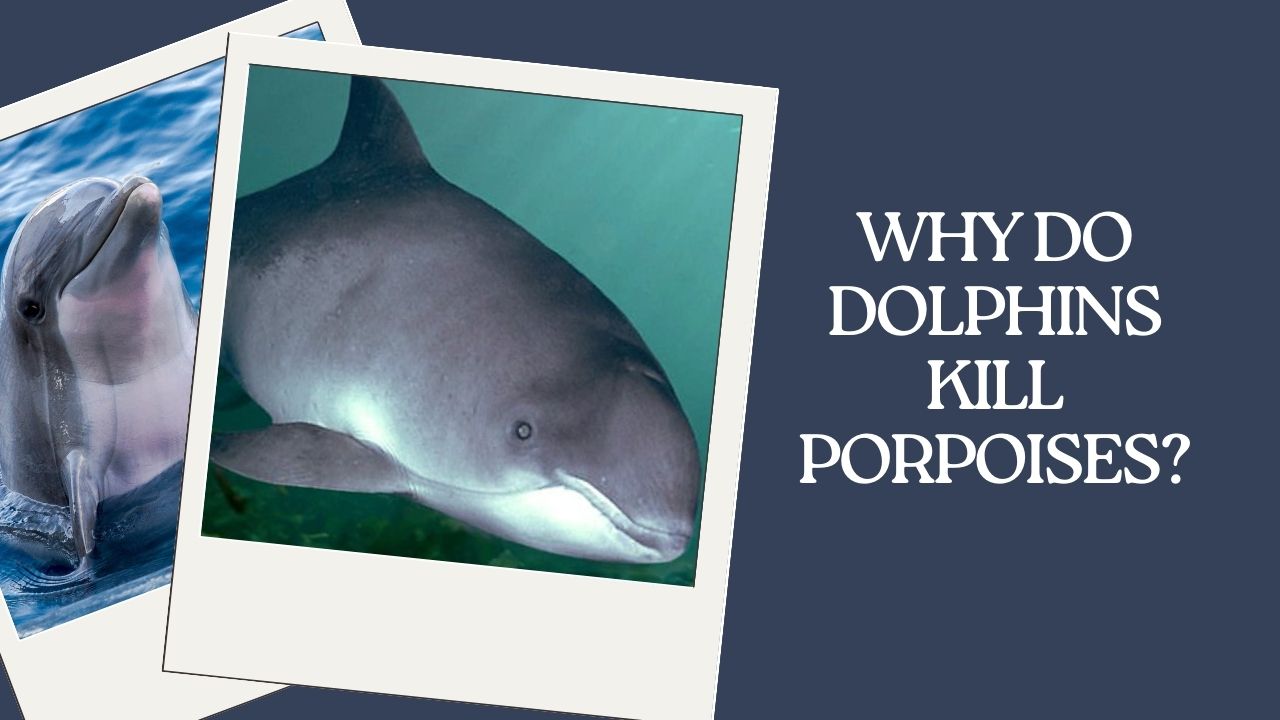


Why Do Dolphins Kill Porpoises? Dolphins are known to kill porpoises due to competition for resources and territorial disputes.
In these situations, dolphins may view porpoises as competitors and eliminate them to secure their own survival and reproductive success.
There may be conflicts in shared habitats between dolphins and porpoises because they are members of different species with differing ecological needs.
Dolphins and porpoises, two species of small-toothed whales, have a complicated and frequently misinterpreted connection.
Despite their apparent similarity, they differ in terms of their habits, physical traits, and preferred habitats.
While porpoises tend to be more solitary or occur in small groups, dolphins are highly gregarious animals that are frequently found in big groups called pods.
When they engage in the same spaces, this disparity in social structures may exacerbate disputes.
The fight for resources is one of the main causes of dolphins killing porpoises. Because they are opportunistic hunters, dolphins, and porpoises may compete for fish and squid.
Apex predators such as orcas and killer whales are among the dolphin species that have been documented feeding on porpoises.
In these cases, the kills are probably motivated by a mix of predatory behavior, territoriality, and competitiveness. [Why do dolphins kill porpoises?]
Aggression between porpoises and dolphins can also be caused by territorial disputes. It is common knowledge that dolphins will protect their areas against trespassers, particularly during the mating or feeding seasons.
Because they are less gregarious and smaller, porpoises might unintentionally enter dolphin territories, which can lead to violent reactions.
Dolphins’ territorial instincts can lead to aggressive interactions and, regrettably, the deaths of porpoises involved in them.
It’s crucial to remember that not every encounter between porpoises and dolphins results in aggression. In certain instances, they might live in harmony while filling distinct roles in the same environment.
Nonetheless, disputes and murders do happen, underscoring the competitive character of maritime environments and the struggle for existence.
Improved conservation and management initiatives to safeguard porpoise and dolphin populations can benefit from an understanding of the causes of these interactions. [Why do dolphins kill porpoises?]
Understanding Dolphin And Porpoise Behavior
Both porpoises and dolphins are amazing aquatic animals that are renowned for their dexterity and intelligence.
Nevertheless, despite their similarities, dolphins have been seen murdering porpoises on occasion.
It is crucial to comprehend both species’ social structures and behaviors in order to understand why these disputes arise.
Exploring Dolphin Social Structure And Behavior
Dolphins are gregarious creatures that reside in intricate social units known as pods.
These pods can range in size from small groups (2 – 30 dolphins) to big groups of 100 or even several thousand dolphins1 and they are made up of both male and female individuals.
There is a well-defined hierarchy within a pod. Dolphins use submission and dominance behaviors to define their social status. [Why do dolphins kill porpoises?]
Priority access to resources is granted to the dominant individuals, who are typically older and more experienced.
They are also frequently seen directing collective activities like hunting and defending the pod from any threats.
Dolphins are renowned for being playful animals who constantly engage in social interactions and acrobatic displays.
These interactions help to fortify the links between members of the pod and add to its complex social dynamics.
Understanding Porpoise Social Structure And Behavior
Porpoises are more solitary creatures than dolphins2. They live mostly along the coast and are not as numerous as dolphins in big groups. Porpoises do, however, occasionally appear to be swimming in couples or small groups.
The core of porpoise social structures is the individual or small family. Their life and safety depend on these close-knit ties. A porpoise group’s members are all essential to the hunting and raising of young. [Why do dolphins kill porpoises?]
Porpoises are typically less gregarious and more reticent than dolphins. They remain careful and keep a watchful eye on their surroundings. Porpoises are solitary creatures, thus internal conflicts are uncommon.
See Also: Can Dolphins And Porpoises Mate? Nature’s Love Stories
Identifying Key Behavioral Traits That Lead To Conflicts
Conflicts between dolphins and porpoises can originate from a number of important behavioral characteristics shared by the two species.
Because of their intense activity and innate curiosity, dolphins may approach porpoises, believing them to be rivals for resources or intruders.
Because of their timid and reserved demeanor, porpoises may be more likely to perceive dolphins as possible dangers and respond defensively. [Why do dolphins kill porpoises?]
Because porpoises and dolphins have different social structures and function in bigger groups where competition for resources and dominance hierarchies are more prominent, these characteristics may also be a factor in conflict.
| Dolphins | Porpoises |
| Highly social animals | Relatively solitary |
| Complex group structures (pods) | Individual or small family units |
| Playful and acrobatic nature | Reserved and cautious |
| Well-defined hierarchy | No pronounced hierarchy |
Understanding these basic distinctions in behavior and social structure helps us to understand why dolphins may act aggressively toward porpoises on occasion.
It’s important to keep in mind, though, that these marine creatures do not always interact violently; reports of their peaceful coexistence in shared habitats are also common.
Reasons For Dolphin-porpoise Conflicts
Both dolphins and porpoises are lovable aquatic animals with comparable habitats and dietary options. However, there are disputes between these two species, which frequently result in lethal collisions.
To reduce such incidents and encourage peaceful coexistence in the marine ecosystem, researchers and conservationists must comprehend the causes of these confrontations. [Why do dolphins kill porpoises?]
Competitive Foraging And Hunting Grounds
Porpoises and dolphins fight for the same few food supplies, especially in locations where there is a high density of prey.
Because both species depend on comparable fish species and tiny sea invertebrates, obtaining sufficient food becomes a top priority. [Why do dolphins kill porpoises?]
When every species strives to increase its own chances of survival and successful reproduction, the competition for these resources might turn into violent confrontations.
Territorial Disputes Over Food Resources
Dolphins are gregarious animals that mark out areas that they fiercely guard against outsiders, such as porpoises.
When it comes to defending their hunting grounds, individual dolphins and dolphin groups exhibit their territoriality by behaving violently toward porpoises who stray into their area.
When these aggressive tendencies intensify, it may result in lethal encounters between the two species. [Why do dolphins kill porpoises?]
See Also: Do Dolphins Kill Their Babies? Surprising Truth
Intraspecies Aggression And Dominance
Aggression and competitiveness are widespread in dolphin populations. The exercise of power and hierarchy by dominant individuals or groups over subordinate persons can occasionally extend to interactions with porpoises.
Under these circumstances, dolphins may attack porpoises in an attempt to assert their authority or defend their standing in the group.
The porpoises involved in these violent confrontations may sustain injuries or perhaps pass away. [Why do dolphins kill porpoises?]
Environmental Factors And Population Dynamics
The dynamics of the population and environmental changes may exacerbate confrontations between porpoises and dolphins.
The availability of prey may be reduced due to factors including overfishing, habitat loss, and climate change, which would put both species in even greater competition.
Furthermore, variations in dolphin and porpoise population numbers can modify the nature of interspecies interactions and possibly heighten the frequency of conflict.
Comprehending the underlying causes of dolphin-porpoise interactions is crucial for both researching the complexities of marine environments and formulating successful conservation plans.
Researchers and conservationists might endeavor to develop long-lasting solutions that foster harmony among the many marine species by addressing the root causes of these disputes. [Why do dolphins kill porpoises?]
The Role Of Human Activities

Mr. Das, a certified pharmaceutical scientist, holds a Bachelor of Science in Pharmaceutical Sciences and passionately contributes to dolphin conservation as a member of the committee in Bangladesh.

Comments are closed.